Guest profiles and reservations
Guest profiles, reservations, and specific operational records from Oracle OPERA Cloud are transferred to Salesforce.
The project aimed to unify reservation, customer, and operational data distributed across disparate systems onto Salesforce for a large-scale hotel chain operating both in Turkey and internationally. To enable cross-system synchronization, existing hotel data from Dynamics CRM was first migrated to Salesforce. Subsequently, MuleSoft integrations were deployed to enable real-time sharing of new records and updates with Oracle OPERA Cloud.
A reliable data stream was required to prevent guest information inconsistencies across applications used by different hotels and to preserve property-specific business rules.
Seven integration services were engineered on MuleSoft to transmit record creation and update transactions to the relevant systems. Property-specific business rules were observed for guest profiles, reservations, loyalty details, and communication consents.
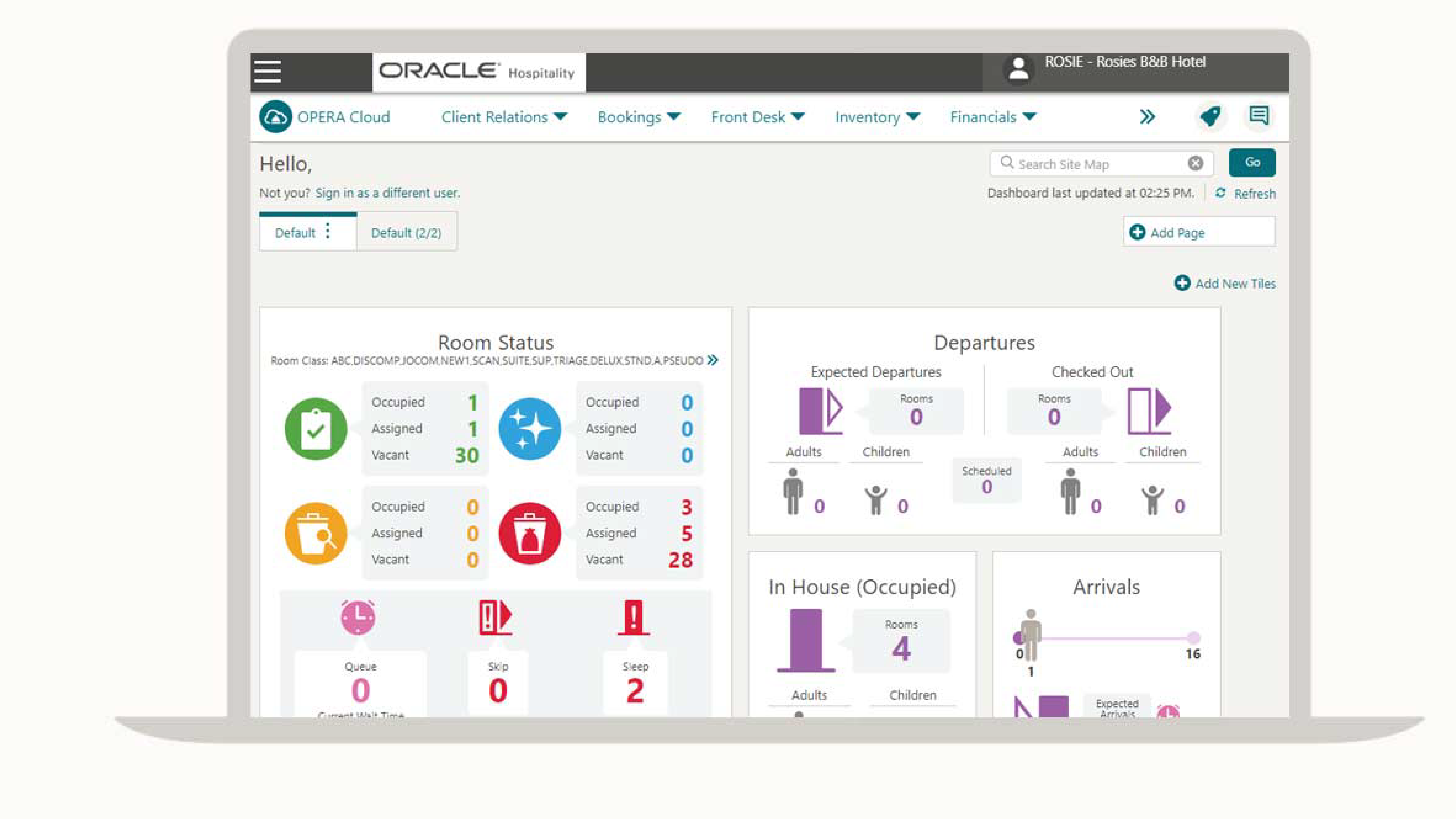

Integration services were configured to fulfill the following data exchange requirements across hotel operations and digital channels.
Guest profiles, reservations, and specific operational records from Oracle OPERA Cloud are transferred to Salesforce.
Profile and loyalty updates managed in Salesforce are synchronized with hotel systems to maintain up-to-date guest insights.
Marketing campaign participation and email newsletter engagements are attributed to corresponding customer records.
Communication preferences are synchronized between Salesforce and third-party consent management platforms while honoring property-specific consent rules.
API connectivity was established with hotel websites for guest authentication, profiling, and membership workflows. Data exchange was enabled with reservation-focused third-party systems.
Guest reviews gathered from third-party platforms are ingested into Salesforce and linked with corresponding guest profiles.
The integration architecture utilizes MuleSoft, Salesforce, Oracle OPERA Cloud, and Oracle OHIP platforms.
MuleSoft was utilized to orchestrate APIs and data flows between the CRM, hotel property management systems, and digital touchpoints.
Real-time connectivity requirements with Oracle OPERA Cloud were fulfilled via Oracle OHIP.
Other Connected Systems and Digital Services
Salesforce-connected API integrations were engineered for third-party applications in reservation and guest communication domains.
Because Oracle OHIP’s WebSocket subprotocol and session renewal requirements could not be met via standard MuleSoft connectors, tailored custom Java code was engineered to address these specific needs.
Establishing an Oracle OHIP WebSocket connection mandated the use of the graphql-transport-ws subprotocol. Because standard MuleSoft WebSocket connectors did not support defining this subprotocol, handshake requests were rejected.
When connection attempts failed due to expired access tokens, manual intervention was often required to reinitialize the session.
Leveraging a custom Java component integrated via MuleSoft Java Invoke, the mandatory graphql-transport-ws subprotocol was seamlessly injected into the WebSocket handshake request. During connection disruptions, token metadata managed within MuleSoft Object Store is evaluated, enabling automatic retrieval of a fresh access token and zero-touch reconnection of the WebSocket channel.
Technical approach: MuleSoft and a tailored Java Invoke component in Oracle OHIP WebSocket integration.
An enterprise integration infrastructure was established to support continuous data exchange between centralized CRM data governance and hotel operations. Real-time dissemination of new records and updates across all connected systems was achieved.
Protocol compliance and automated self-healing reconnections were achieved for Oracle OHIP connectivity, eliminating manual intervention. Development and end-to-end integration support were delivered by a dedicated four-person software engineering team.